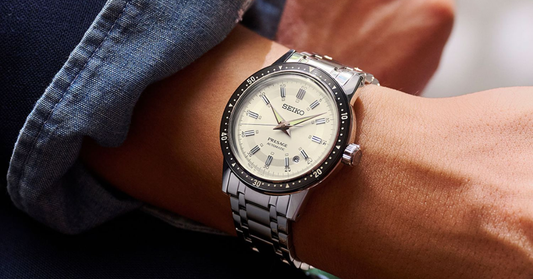

Mechanical vs. Automatic Dive Watches: What's the Difference?
Among dive watches, an automatic watch movement is technically a type of mechanical dive watch movement: both run on a spring-driven system with no battery, but manual mechanical dive watches need to be wound by hand, while an automatic watch movement winds itself using the natural motion of your wrist. Understanding this distinction matters when shopping for dive watches, since it affects daily maintenance, long-term reliability, and how the watch performs if it sits unworn for a few days.
What "Mechanical" Actually Means for Dive Watches
Any dive watch movement other than one made of quartz is classified as mechanical. The movement of a dive watch classified thus works through the use of the energy provided by a wound-up spring, gears, and an escapement mechanism. It does not need batteries or any electronic component at all. Its relies entirely on the energy stored in its mechanical components, and this is what makes it valued among collectors.
Within this category, there are two ways the mainspring gets wound:
Manual (hand-wound) dive watch movement, where the wearer turns the crown daily or every few days to keep the mainspring tensioned.
Automatic watch movement, where a weighted rotor inside the case swings with wrist motion and winds the mainspring automatically as you go about your day.
Both fall under mechanical dive watches in the strictest sense, but in everyday conversation, "mechanical" is often used to mean the manual-wind version specifically, while "automatic" refers to the self-winding version. That's the distinction this comparison focuses on.
How Automatic Watch Movement Works
An automatic watch movement has the addition of a semicircular rotor, normally constructed from a heavy metal such as tungsten or brass, which is mounted on a shaft inside the case-back. During normal wear and use of the watch during the day, the rotor moves and harnesses this motion to drive the mainspring via the gear train. Dive watches manufactured with automatic watch movements normally have 40 to 80 hours of power reserve when completely wound up; this means the watch will continue to operate for a day or two even after you remove it for one night.
The biggest benefit of the automatic watch movement is its convenience. You don't need to manually wind your watch as long as it's being worn on a daily basis. The downside of this type of movement is that the case is thicker in order to accommodate the rotor, and the watch stops after a few days of non-use and needs to be manually wound.
How Manual Mechanical Dive Watches Work
Manual mechanical dive watches do not have the rotor at all. You wind the watch with the crown by yourself once per day in order to ensure that the mainspring remains under tension. As a result, you get a slimmer watch body, as well as a lighter one, because there is no rotor system to take into account, and for those who are true mechanical watch enthusiasts, it is quite a treat.
There are two significant disadvantages to a manual mechanical dive watch, but they are clear enough. If you fail to wind your watch once per day, it will stop working. It is quite a problem for divers who would like to put on their watch without having to worry about it.
Comparing Performance for Dive Watches
Dive watches must endure tough situations like water pressure, changes in temperature, and impacts on the watch itself, so selecting a dive watch movement means a little bit more than mere convenience.
Wrist motion and durability. Automatic watch movements are usually great for active use because, in addition to providing energy for activities such as swimming, wrist motion will keep the movement of the watch wound. The mechanical dive watches with manual movements are equally durable but require the user to remember to wind them.
Thickness and water resistance. Since the mechanical watches with manual movements are normally thinner, some of them may be somewhat thinner than others. Water resistance in dive watches is determined not by the kind of movement but rather by the design of the case, gaskets, and crowns, and both may provide professional diving-level water resistance (100 meters or more).
Precision. The manual and automatic types of movements in dive watches are not as accurate as quartz movements, which can be off by a few seconds in a day depending on the type of movement and calibration. However, for most people, this is the charm of owning a dive watch, not a negative aspect.
Maintenance. Regular servicing is necessary for both types of dive watch movements, typically once every three to five years to clean and lubricate the gears. In the case of an automatic movement, there is one more moving piece (the rotor and its bearing) that is checked by the watchmaker during servicing.
Which Should You Choose?
If your preference is for dive watches that can be worn on a day-to-day basis without needing to think about winding, then the automatic dive watch movement would definitely be the more logical choice, which explains why the vast majority of dive watches available today, whether inexpensive or expensive, rely on this particular dive watch movement. On the other hand, should you have a liking for hand-winding watches, intend to wear your watch regularly, or would prefer a watch with a more compact case, mechanical dive watches with manual dive watch movement make for a good option, especially if you are collecting watches to form a rotation.
Whichever the case may be, both are still classified as mechanical dive watches and come with the allure that makes individuals opt for these watches over the quartz variety.

Servicing and Long-Term Ownership
Regardless of the chosen watch movement in your dive watch, owning the piece over the years will depend on proper care. Dive watches with a manual mechanical dive watch movement or an automatic watch movement will need yearly inspection of their seals and gaskets to ensure water resistance if used on a regular basis, because even the slightest gasket deterioration may eventually affect the resistance of dive watches to water. Such pressure testing is usually performed by a jeweler to ensure that the seals are still intact before wearing your dive watches underwater during the year.
It is also advisable to regularly get a particular dive watch movement serviced by a watchmaker who is experienced in servicing that caliber in your dive watches. Both automatic watch movements and mechanical dive watches have very precise mechanisms inside, so a service center unaware of the particularities of a certain movement may actually cause irreparable damage to it. In addition, keeping a service record will be helpful in case you decide to sell or hand down your dive watches, because properly serviced dive watch movements are valued higher.
Why Choose WatchIt USA
Deciding whether to purchase a manual or automatic dive watch movement becomes easy with the help of a professional jeweler who is able to provide explanations for their technical characteristics and pair the dive watches according to your actual usage. WatchIt USA provides a selection of mechanical dive watches that are created on the basis of both manual and automatic watch movements, assisted by employees who know everything about watch power reserves and water resistance ratings. Whichever way it may be, when purchasing a new dive watch or completing your existing collection of watches, WatchIt USA is always there to assist you with your purchase.
Tags:
Previous
Free Shipping on Orders $450+: Labor Day Jewelry Sale at Watch It USA
Next
The G-SHOCK That Learned to Travel Light
Related articles

The G-SHOCK That Learned to Travel Light
Sep 21 2026


Top 10 Best Affordable Watches
Aug 31 2026
Best Movado Watches for Men Under $1,000
Aug 20 2026